
Corporate Eye
The Animal Supplement “Pinfenon”
Scarecrow
Mr. Okawa heads Scarecrow, a company that develops, researches and sells supplements for use in veterinary practice, working together with university researchers and veterinarians. We asked him about the story behind the creation of the hit product Pinfenon, and the difficult road it took to reach the market.
- Profile: President Hiroshi Okawa
- Date of birthDecember 17, 1964
- HometownTokyo
- HobbyShogi (Japanese chess)
- Most admired personChikuro Hiroike
- Motto“Jikyo fusoku” — strive to improve yourself without rest
What led you to start making supplements for animals?
Okawa:In my previous job, I researched and developed supplements for people and supplied them to hospitals. Supplements are said to be a one-trillion-yen market, but because of regulations and other factors, I felt the future was not very bright for a small company trying to keep developing them. Around that time, the dog my family kept at my parents’ home passed away, and my parents told me they had spent two million yen on its treatment and hospital stays. That showed me there was a “market built on people’s love for their dogs,” and I came up with a business model of developing and selling supplements for dogs.
But starting a business turned out to be different from reality.
Okawa:I started out with a limited company at the age of 39, and things did not go as planned from the very beginning. For six and a half years after founding the company, I went alone to all kinds of pet-related gatherings and kept asking people to try our supplements, but nothing took root. So I decided the only way was to have veterinary clinics use them, and I started visiting them. Eventually I could not even afford the train fare, so I would ride to the farthest station on the line and walk back, making sales calls and listening to people along the way. Even so, nothing sold. I had opportunities to present at academic conferences, but the reception was not good. I was at a loss day after day, and I still remember sitting on the stairs inside a station, unable to move. I was in a state where I felt I might fall apart mentally.
Then a turning point came.
Okawa:In the midst of all that, I had my first opportunity to conduct joint research with a university and launch a product, and it began to sell surprisingly well. That product was Pinfenon. Before long I had paid off my debts, was able to hire staff, and the business got on track. It was a moment when I felt as if I had caught hold of Adam Smith’s “invisible hand” through the selection flow.
Tell us about where things stand now.
Okawa:We have been going with Pinfenon alone all along, and it continues to do well through 2,000 veterinarians and online sales. We are now developing new products, starting with “Ipet,” while also giving presentations at various universities and lectures. We are also promoting a qualification called Medical Coordinator, which prepares people to respond to pet owners’ concerns and questions about their pets.
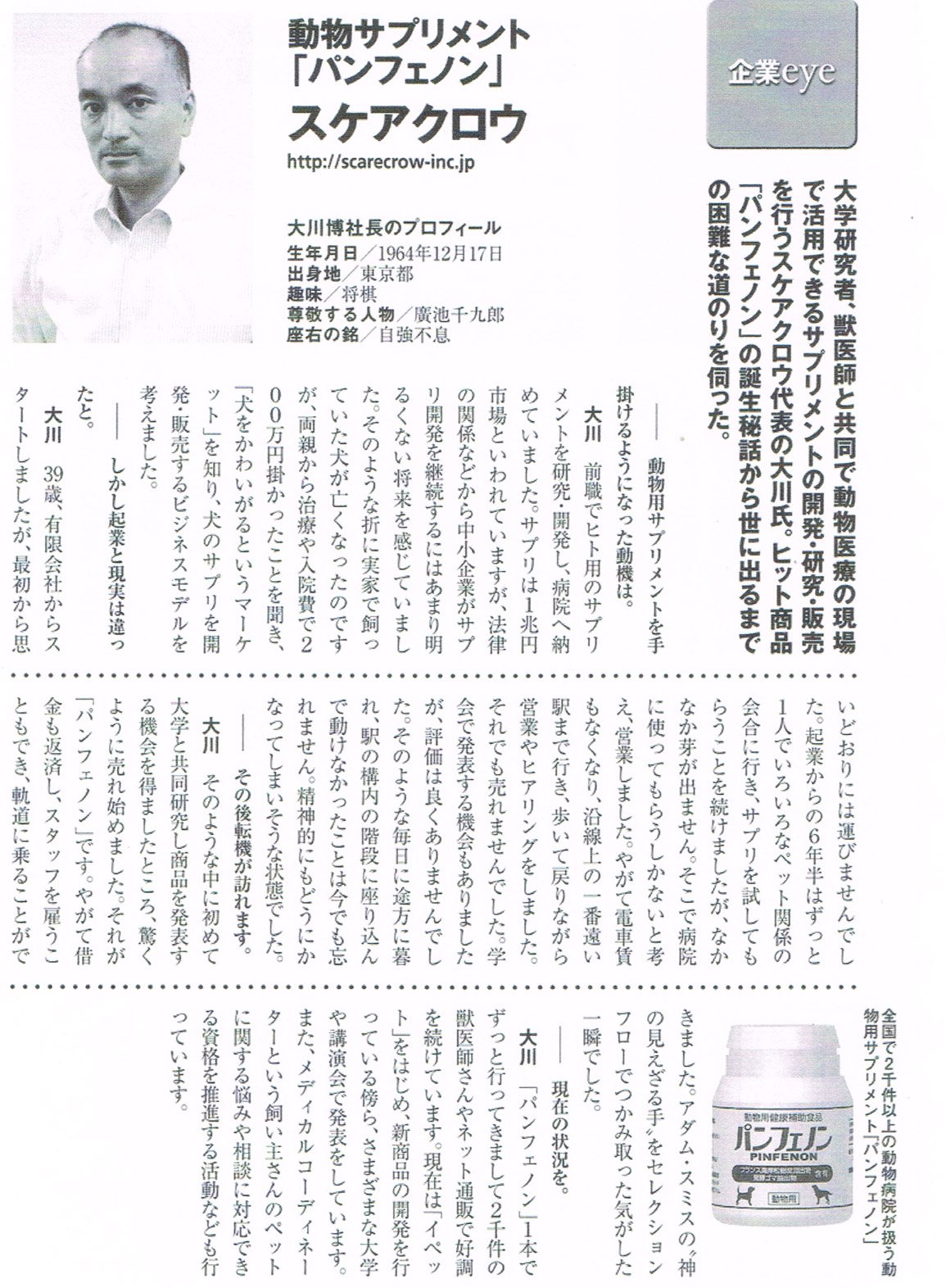
(Photo) Pinfenon, an animal supplement carried by more than 2,000 veterinary clinics across Japan